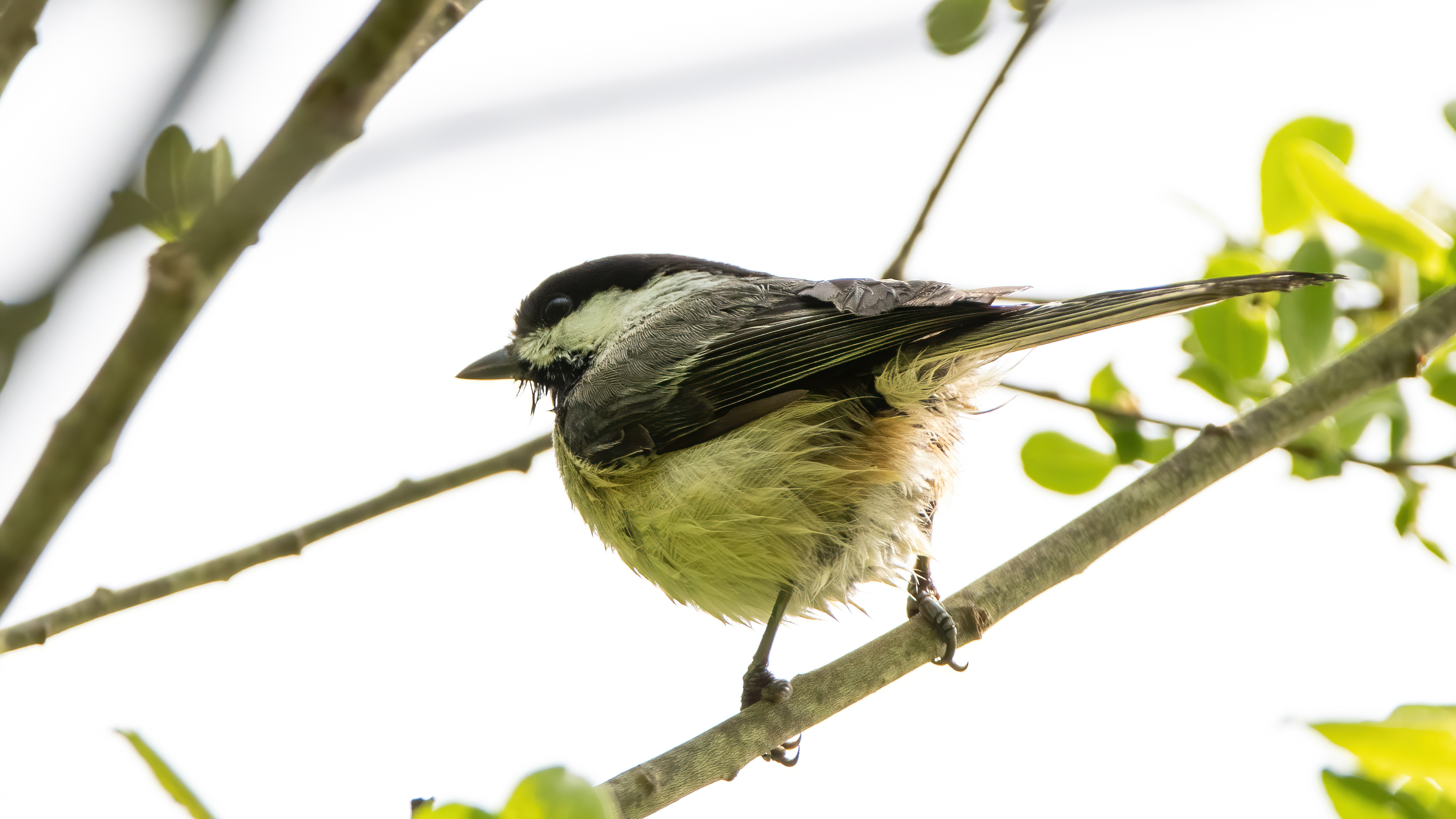
Sounds Nice, But What Does It Mean?
Quick one about the Black-capped Chickadee's call.

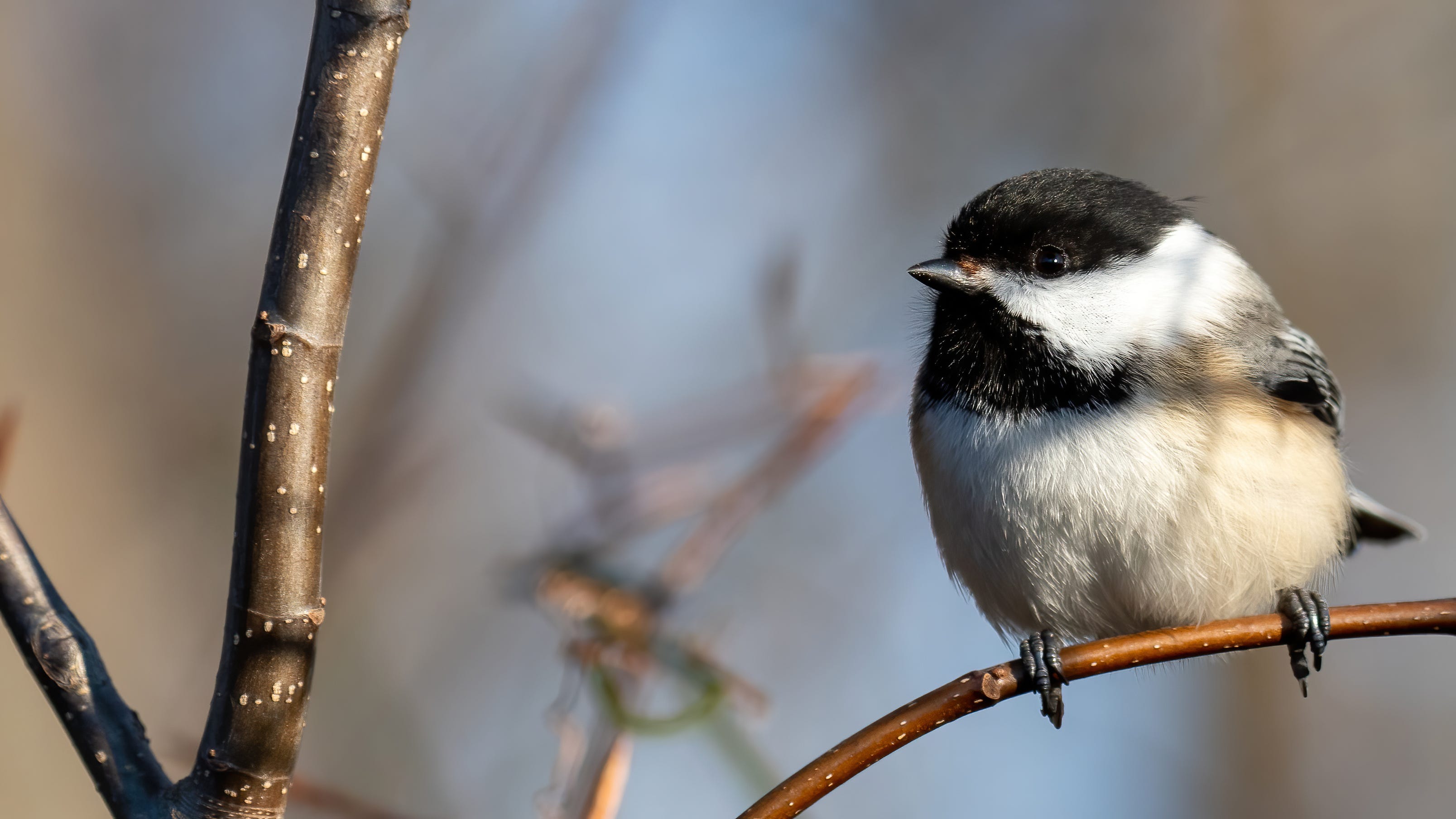
Chickadees are an example of a bird named based on how they sound. Bobwhites, Eastern Phoebes, Poorwills, Killdeer, Eastern Wood-Pewees—but this is about chickadees.
Chicka-dee-dee-dee. You’ve probably heard that call. When you bird where I bird, you’ll often see Black-capped Chickadees. You’ll hear them too. So it’s worth taking some time to learn more about them.
This is about Black-capped Chickadees. Not Mountain Chickadees, not Chestnut-backed, not Carolina—just the birds I’ve come to know.
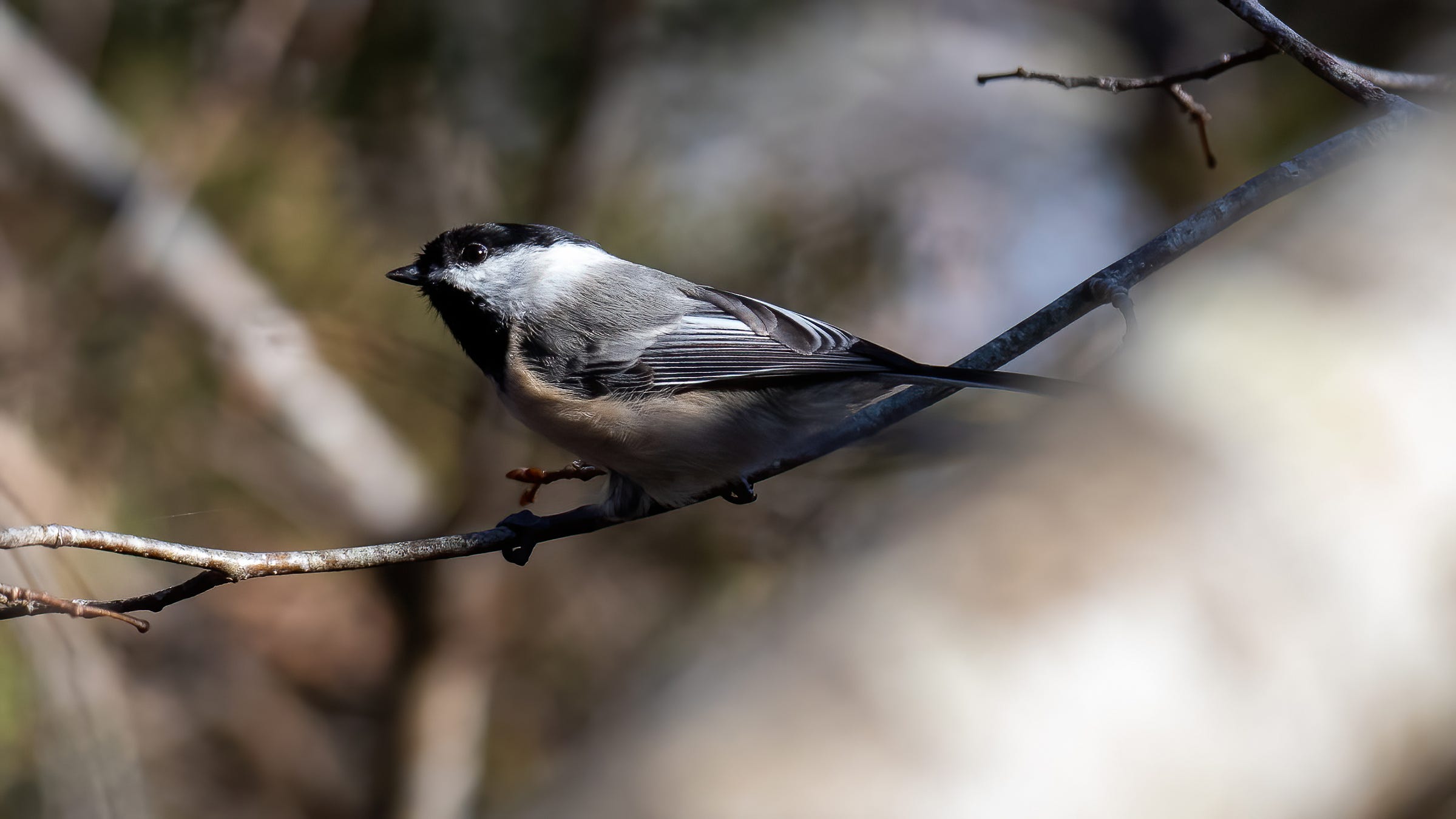
These birds are many things. Quiet is not one of them. David Sibley, in his outstanding What It’s Like To Be A Bird, writes that chickadees are “the busybodies of the forest, peering into crevices, exploring tangles, studying twigs and pine cones, and constantly chattering about it.”
They have a repertoire of other sounds than the chicka-dee-dee-dee call. A whole language, really. Most well known are the fee-beee and hey sweetie songs.
On the island of Martha’s Vineyard, the Black-capped Chickadees sound a tad different. Explained in this detailed article, with a helpful breakdown of how chickadees sing in specific areas of the island:
At Aquinnah and on much of the western end of the Island, the chickadees sing the backwards monotone (sweetie-hey) at low and high pitch only. Mid-Island they throw in a single tone sweetie-sweetie on high with the sweetie-hey down low. On the Island’s eastern end, the dialect includes a low one-tone sweetie-sweetie and a high sosweetie-sweetie. Only the chickadees from Edgartown let loose on a high and low sosweetie-sweetie.
The article goes on to explain how the chickadees on the even smaller Vineyard-adjacent island of Chappaquiddick sing differently too—but I won’t get into the weeds here. These songs must be passed down. A bird has to hear a song to learn it.
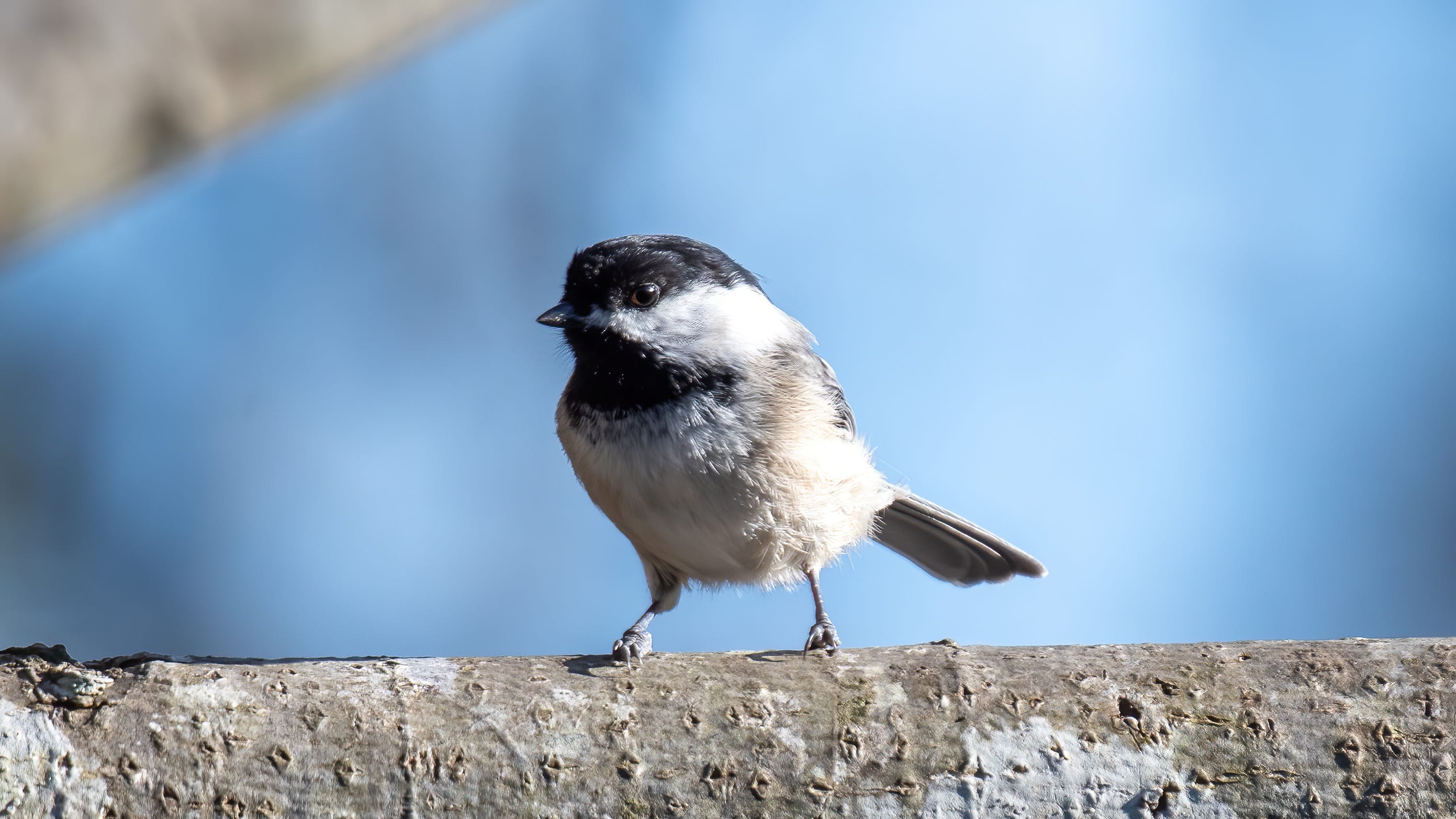
Some fun information it isn’t too hard to come by is that the number of dees in a Black-capped Chickadee’s call is commensurate with the threat level a bird perceives, scoping out a potential predator. More dees, more danger. Other species of birds know this. Relying on chickadees to bring awareness of any nearby threats permits them to focus on other needs. The sounds and local knowledge of chickadees prove useful. The dees can mean “watch out.”
This article explains how the Black-capped Chickadee’s system of calls is “far more subtle and information-packed than scientists previously imagined." The calls are “one of the most sophisticated signaling systems discovered among animals.” A chickadee can change its calls in ways we can’t notice as humans. We can notice the number of dees. In my mind, something larger—like a human—would get more dees than something small.
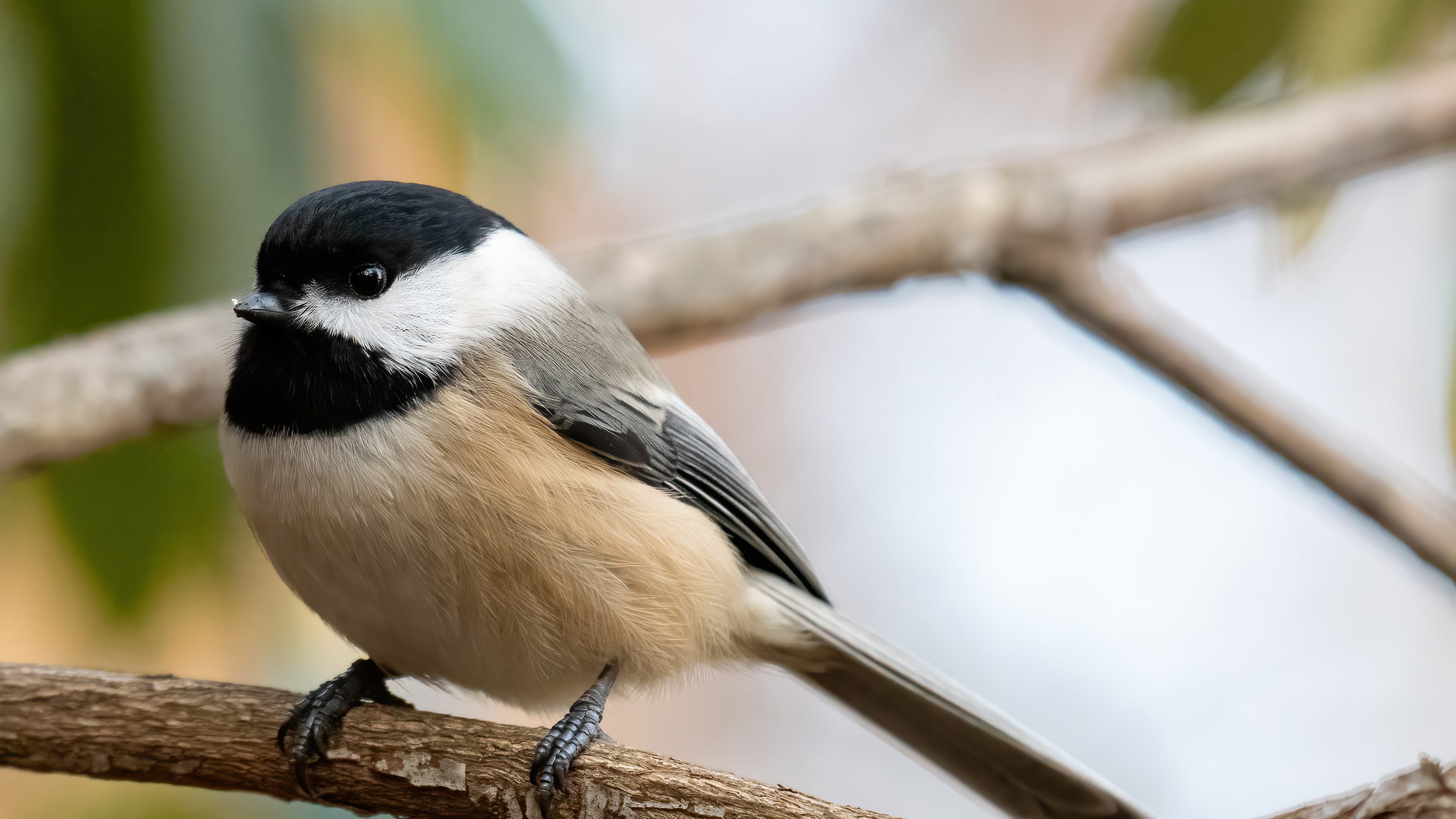
It turns out I was incorrect for years. Well, not entirely incorrect. Size is a factor, but not the main basis of dees. An American Kestrel might get more than a large hawk. Selfishly, I always figured I’d rouse more dees walking past a chickadee than something smaller. Years ago, I wrote for The Center for Humans and Nature about feeding birds by hand: “I at least deserve a chicka-dee-dee-dee with an equal dee-count given for a tabby cat.”
Clearly, I’ve been caught up with this for a bit. The number of dees a chickadee makes is reflective not of danger in general, but danger specifically to chickadees. Chickadees don’t fear us. If I was an agile owl? More dees.
Chickadees also have a specific call—seet or si-si-si—for “a threat on the wing, a shrike or sharp-shinned hawk,” explains Jennifer Ackerman in The Genius of Birds. She elucidates and continues with this idea in The Bird Way: “More dees means a smaller, more dangerous predator…a small agile bird of prey such as a merlin or a nothern pygmy owl may draw a long string of up to twelve dees.”
See? There’s a lot more to the sounds a bird makes than scans at first blush.
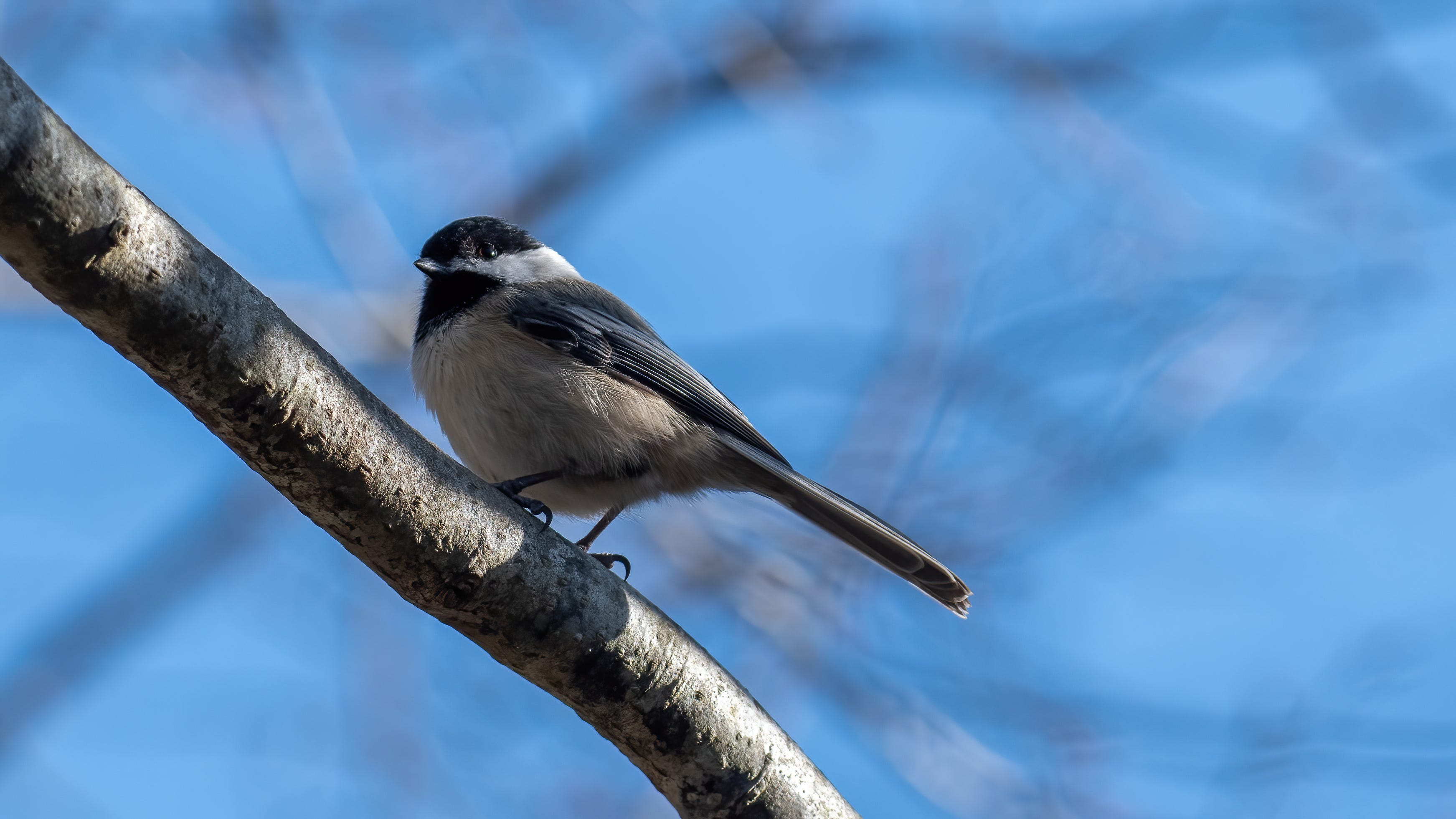
Chickadees might seem like simpletons to us. Little bird-feeder haunts. No surprise, they are not. They’re smarter than we know. As explained by Sibley, a chickadee “can store up to a thousand seeds in a day.”
Yes, but are they able to recall where? He goes on, “the bird can remember where each item is stored, and at least some information about which ones are the best quality and which ones have been eaten already.”
A chickadee’s vocalizations, like ours, result in an elaborate method of communication. A language, per Ackerman, “complete with syntax that can generate an open-ended number of unique call types.”
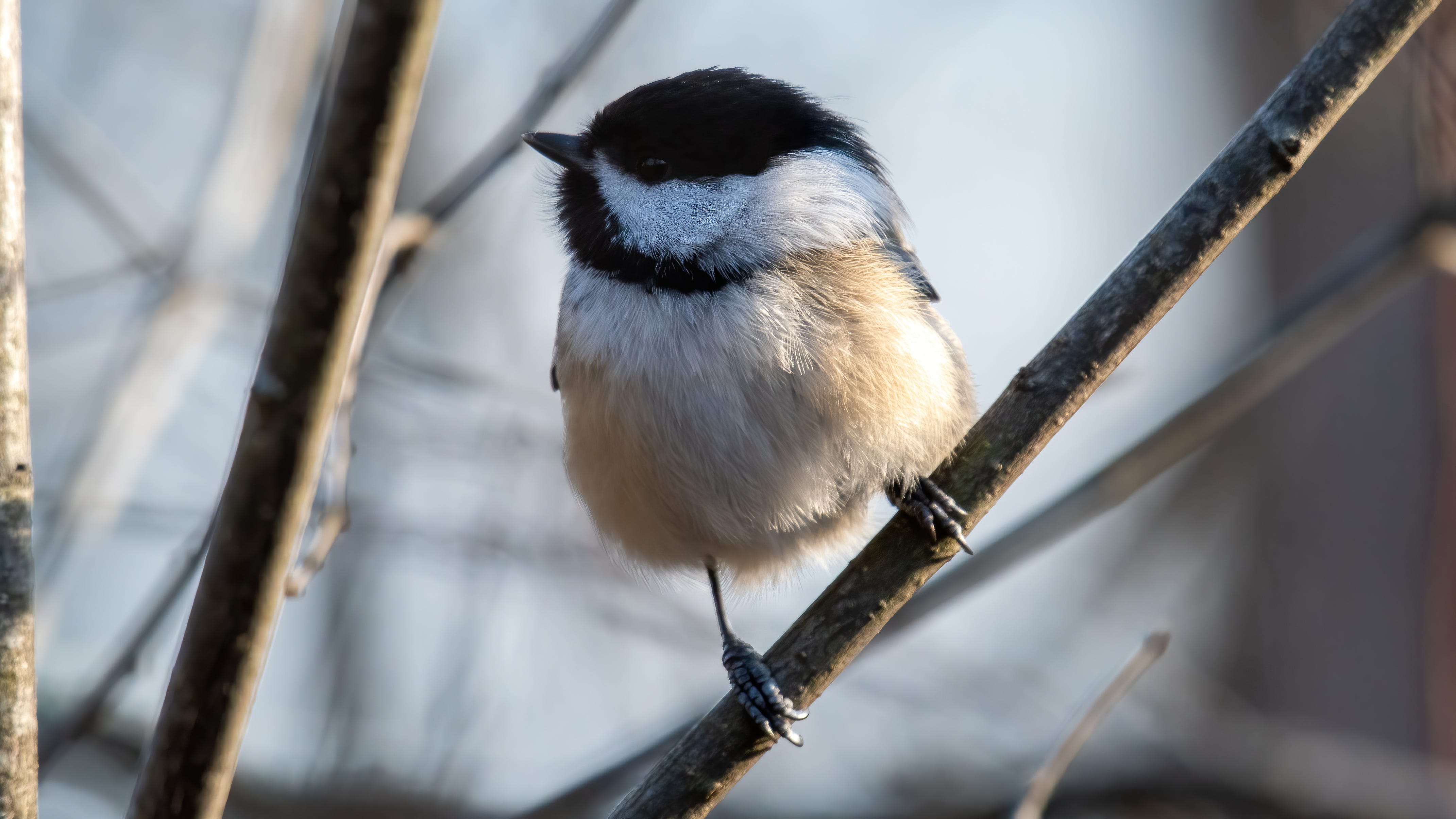
It’s easy to see a Black-capped Chickadee and write it off as dull or uninteresting.
They’re common. To many, this makes them boring. I have fewer pictures of chickadees than I expected because I don’t feel as pressured to photograph them. Again, they’re common. Can always see one tomorrow.
I believe letting your thoughts about chickadees be dominated by their commonness is a mistake. Chickadees are wellsprings of wonder in plain sight and abundance. I should take more pictures of them. They’re not uninteresting if you take the time to learn the reasons why. They’re not dull at all, as evidenced by those same reasons.